
Contact Me
Phone: (412) 391-4990
Email
Practice Areas
- Medical Malpractice
- Wrongful Death
- Birth Injuries
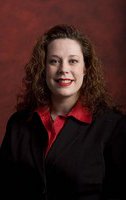
Elizabeth L. Jenkins
Pennsylvania Medical Negligence Attorney
Something happened during your care, and the explanation you were given does not match what you saw. Maybe a delivery went wrong in a way no one will explain. Maybe a diagnosis arrived months after it should have. Families in that position rarely know a single lawyer, let alone one who reads fetal monitoring strips and operative reports for a living.
Elizabeth L. Jenkins does. She grew up in Pittsburgh, built her practice around medical negligence cases, and has tried them to verdict in courtrooms across Western Pennsylvania. When you call John A. Caputo & Associates, P.C., she is the person who picks up.
Who Is Elizabeth L. Jenkins?
Elizabeth L. Jenkins is a Pittsburgh-born trial attorney with John A. Caputo & Associates, P.C., concentrating on medical negligence and catastrophic injury claims for patients and families throughout Pennsylvania. She earned her law degree at Duquesne University and has spent many years representing injured people rather than the institutions that harmed them.
She is from here. Raised in Pittsburgh, she took her undergraduate degree at the University of Pittsburgh and stayed in the city for law school. The counties she tries cases in are the counties she grew up around.
She began her career defending civil cases. That side of the work teaches a lawyer how a file gets taken apart — which records get pulled, which timelines get questioned, where a thin claim gives way. She moved to representing injured patients and has stayed there since.
The practical result is a lawyer who says no often and says it early. Most calls do not become cases. She would rather tell someone that in the first conversation than six months into a records review.
Why Does She Concentrate on Medical Negligence Cases?
Medical negligence work demands fluency in medicine as well as law: reading records, identifying where care departed from accepted standards, and proving it to a jury. Jenkins built her practice around that narrow category rather than a general injury caseload, which is why our firm declines most inquiries it receives.
A general practice firm can handle a rear-end collision with a police report and a stack of medical bills. A medical negligence case starts with several hundred pages of records written in a language the client cannot read, and often the only person who suspects something went wrong is the person it happened to.
Getting from there to a jury takes physicians willing to review the chart and testify to what should have happened. Pennsylvania is strict about who qualifies to give that testimony, and lining up the right reviewer in the right subspecialty is frequently what determines whether a case exists at all.
That work is slow and expensive. It is also why we are selective. Both attorneys would rather carry a small number of cases they can try than a large number they cannot.
What Kinds of Cases Does She Handle?
Her caseload centers on serious, permanent harm from negligent medical care: birth injuries, oxygen-deprivation brain injuries, surgical and anesthesia errors, missed and delayed diagnoses, and hospital-acquired infections. She also handles catastrophic injuries from commercial trucking collisions. Whether any particular claim can proceed depends on the facts and the medical records.
The cases that reach her tend to share a shape: a person who was expected to recover, an outcome nobody prepared the family for, and a chart that says more than the conversation in the hallway did.
- Birth injuries — cerebral palsy, brachial plexus and Erb’s palsy injuries, and brain damage traced to how labor and delivery were monitored and managed
- Oxygen-deprivation brain injuries in adults — hypoxic and anoxic injuries following delayed intubation, uncontrolled surgical bleeding, or a deteriorating patient nobody watched
- Surgical and anesthesia errors — wrong-site procedures, retained objects, and dosing failures before, during, or after an operation
- Missed and delayed diagnoses — cancer, stroke, cardiac events, and serious infections identified too late to change the outcome
- Hospital-acquired infections — infections that progress to sepsis and death because no one escalated in time
- Amputation and spinal cord injuries — permanent losses caused by the care a patient received rather than by the condition that brought them in
- Catastrophic trucking collisions — commercial vehicle crashes causing brain, spinal, or fatal injuries
She does not take routine car accident claims, workers’ compensation matters, premises cases, or nursing home claims. Those go to lawyers who handle them every day. When a call falls outside what we do, she will point the caller toward someone who does handle that work. Hearing no from one firm does not mean no one can help.
Where Has She Tried Cases in Pennsylvania?
Elizabeth Jenkins and John Caputo have tried cases in Allegheny County and across Western Pennsylvania, including Butler, Armstrong, Westmoreland, Washington, Beaver, and Erie counties. Elizabeth is also admitted before the U.S. District Court for the Western District of Pennsylvania, which sits in Pittsburgh, Erie, and Johnstown.
Our office is in the Grant Building on Grant Street, a short walk from the Allegheny County Court of Common Pleas, and Allegheny County is where most of our cases are filed. It is not the only courtroom that matters.
Juries in the smaller and more rural counties of Western Pennsylvania have a reputation among plaintiffs’ lawyers for being difficult, and plenty of firms will not go there. Jenkins and Caputo do. Presenting a medical case to a jury pool that has rarely seen one takes a different approach than presenting it downtown, and that is learned by doing it.
Case selection gets more demanding with distance. We will consider a strong case anywhere in Pennsylvania — the reach of the state’s large health systems has made that necessary — but generally, the further a case sits from Pittsburgh, the stronger the medicine has to be before we take it on.
Education, Admissions, and Professional Background
Jenkins has spent her entire education and career in Western Pennsylvania.
Education
- University of Pittsburgh — Bachelor of Science in Political Science, with minors in English and Communication
- Duquesne University School of Law — Juris Doctor
Admissions
- Commonwealth of Pennsylvania
- U.S. District Court for the Western District of Pennsylvania
Professional affiliations
- American Bar Association
- Pennsylvania Bar Association
- Pennsylvania Association for Justice
- Allegheny County Bar Association
- Western Pennsylvania Trial Lawyers Association
She practices alongside John A. Caputo, who founded the firm and also took his law degree at Duquesne. Between them they have many decades of trial experience in medical negligence and catastrophic injury litigation.
What Happens When You Call the Firm?
Callers reach an attorney rather than an intake coordinator or a screening service. Elizabeth Jenkins speaks with people directly, listens to what happened, and gives an honest assessment of whether the facts support a claim. Consultations are free, and accepted cases are handled on a contingency fee basis.
Most people who call have never hired a lawyer for anything. They are not sure what they are supposed to have ready, and many worry the call itself commits them to something. It does not.
- You describe what happened. In your own words, in whatever order it comes out. You do not need dates, record numbers, or medical terminology.
- She asks questions. Usually about timing — when symptoms started, when someone was told, how long passed before anything changed.
- You get a straight answer. Sometimes that answer is that a bad outcome was nobody’s fault. Medicine carries risk, and not every injury comes from negligence.
- If the facts warrant it, we request the records. We obtain them ourselves. You do not need a complete file in hand to call.
One practical note for anyone in this position: whatever you already have — discharge paperwork, imaging results, a timeline you wrote down for yourself — hold onto it, and keep it off social media. Written recollections made close to the events tend to be more useful later than anything reconstructed from memory a year on.
Speak With Elizabeth Jenkins and John Caputo About Your Case
If negligent medical care harmed you or someone in your family, we will review what happened at no cost. Elizabeth L. Jenkins and John A. Caputo personally evaluate every potential case. When you call, you talk to a lawyer.
Call 412-391-4990 or contact us online to arrange a free consultation. We represent clients throughout Pennsylvania and work on a contingency fee basis: you pay nothing unless we recover compensation for you.
Frequently Asked Questions
Does Elizabeth Jenkins take cases outside the Pittsburgh area?
Yes. We handle medical negligence cases throughout Pennsylvania, with the heaviest concentration in Allegheny County and the surrounding Western Pennsylvania counties. Cases further from Pittsburgh are evaluated more selectively, but distance by itself does not rule one out.
Will I speak with an attorney when I call, or with intake staff?
You will speak with an attorney. Elizabeth Jenkins and John Caputo take these calls themselves rather than routing them to a screening service. You may initially speak with a paralegal who will take down basic information and provide a summary to John and Elizabeth. That is deliberate — the details that determine whether a medical negligence case exists rarely survive a script.
What does it cost to have a medical negligence case reviewed?
Nothing. Consultations are free, and we accept cases on a contingency fee basis, which means no upfront costs and no fee unless we recover compensation for you. The fee is discussed and agreed to before any work begins.
How long does someone generally have to bring a medical negligence claim in Pennsylvania?
Pennsylvania generally allows two years from the date of injury or from the date it reasonably should have been discovered, though the deadline depends on the circumstances, and claims involving children follow a different rule. Because records and physician review take time, waiting narrows the options available. The timing is different for minors as well.
Certified Legal Specialties
- National Board of Trial Advocacy, Civil Trial Advocate (1992; recertified 1997, 2002, 2007, 2012, 2017, and 2022)
- American Board of Professional Liability Attorneys, Diplomate (1994, certified 1999 in Medical Professional Liability, recertified 2004, 2009, 2014, 2019)
Education
- Duquesne University School of Law, Pittsburgh, Pennsylvania
- DePauw University, B.A.
Classes & Seminars
- University of Pittsburgh School of Law and Duquesne University School of Law
- Adjunct Professor, University of Pittsburgh School of Law; Co-teaching Litigation Planning and Strategy 2003 – 2007
- Pennsylvania Bar Institute, Lecturer
- Pennsylvania Trial Lawyers Association, Lecturer
- California University of Pennsylvania, Lecturer
- National Institute for Trial Advocacy (NITA), University of Pittsburgh School of Law – select demonstrations
- National Institute for Trial Advocacy (NITA), Duquesne University School of law – August 1997; August 1998
- Trial Advocacy Institute sponsored by the Allegheny Bar Association and The Academy of Trial Lawyers, 1996
- University of Pittsburgh School of Law, Trial Certification Program, “Litigation Planing and Strategy”, two hours weekly, Fall 2003 – 2006
Professional Associations
- Allegheny County Bar Association 1984-2016, Judiciary Committee, 1996-1999; Civil Litigation Section, Chairperson, 1989; Voir Dire Rules Subcommittee; Charter Fellow, ACBA Foundation
- American Association for Justice
- Pennsylvania Trial Lawyers Association
- Academy of Trial Lawyers of Allegheny County, President, 2002–2003; Vice President, 2001; Secretary, 2000; Treasurer, 1999; Board of Governors, 1989–1991, 1996–1998
- Member, Disciplinary Board Hearing Committee, Supreme Court of Pennsylvania, 1990–1996
- Member Birth Trauma Litigation Group, American Association of Justice
Bar Admissions
- Pennsylvania
- U.S. District Court Western District of Pennsylvania
- U.S. Court of Appeals 3rd Circuit
Honors
- Martindale-Hubbell Rating – AV
- Selected to the Super Lawyers List, 2004 – Present
- “Best Lawyers in America”, by Naifeh and Smith, Medical Malpractice, 2005 – Present
- “Best Lawyers in America”, by Naifeh and Smith, Personal Injury 1995-Present
- Best Lawyer’s Pittsburgh Personal Injury Lawyer of the Year, 2011 and 2014
- International Academy of Trial Lawyers (2009), Fellow
- The National Trial Lawyers (2009), Fellow
- International Society of Barristers (2006), Fellow
- American Board of Trial Advocates (1999), Fellow
- Preeminent Lawyers, Martindale-Hubbell CO. 1995
- American College of Trial Lawyers (1993), Fellow
- Academy of Trial Lawyers of Allegheny County (1984), Fellow